
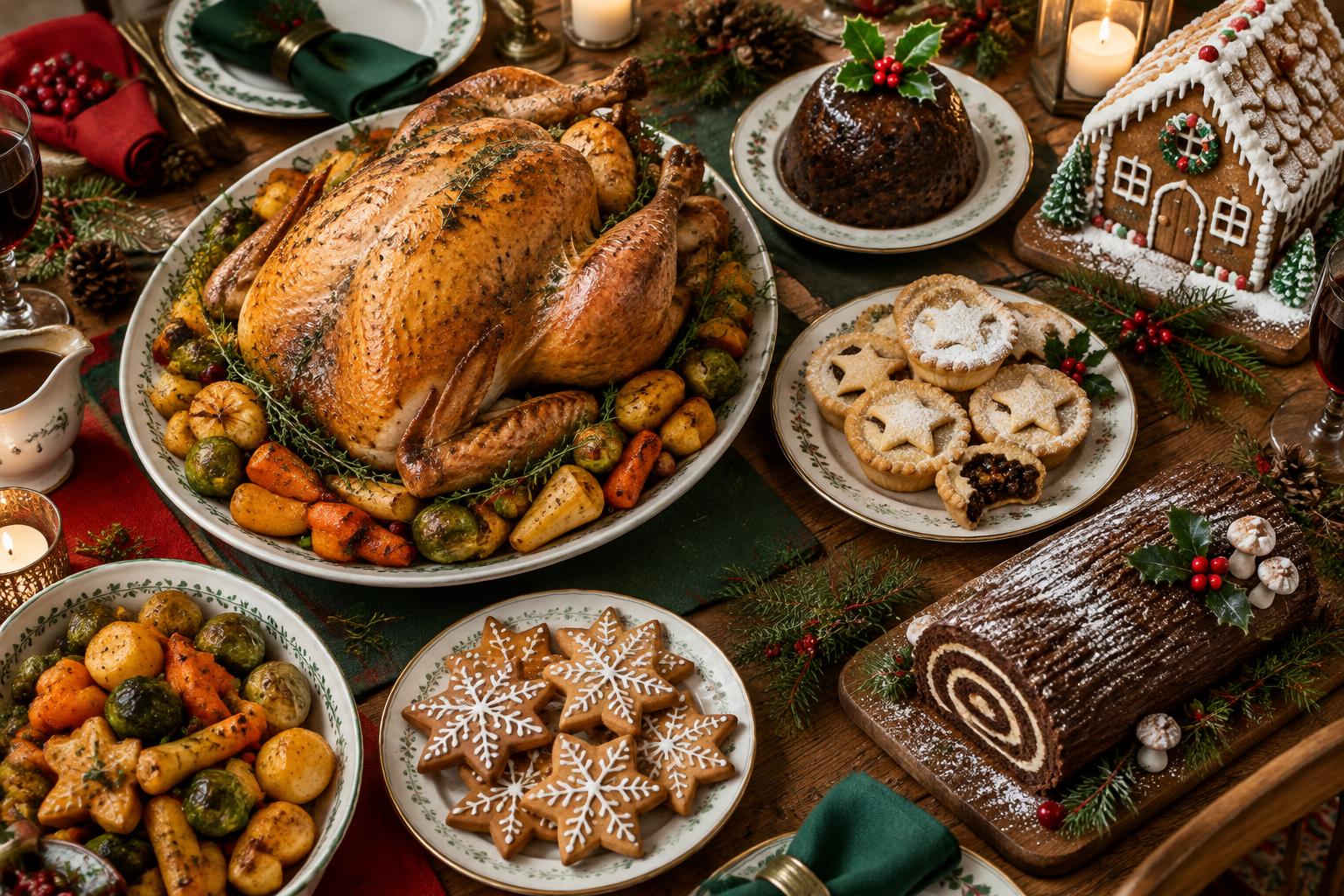
Christmas dinner did not arrive as a finished menu
Turkey, roast potatoes, pudding and mince pies can feel like a set of rules handed down together. In reality, the festive table was assembled over centuries. Ingredients travelled, fashions shifted and families adapted what they could afford. Even the most traditional Christmas dinner has a history of change.
When did turkey become a Christmas tradition?
Turkey became known in Britain in the sixteenth century and appeared at elite Tudor feasts. That does not mean every Tudor household sat down to one at Christmas. Nor was turkey the only Victorian centrepiece: goose and other meats remained important, and the menu depended on means and preference.
In A Christmas Carol, published in 1843, Scrooge’s purchase of a magnificent turkey signals generosity and abundance. Its place in the story reflects its festive appeal, not proof that everybody already ate it. Turkey’s popularity grew over time as supply and affordability changed.
Why is Christmas pudding called plum pudding?
The word “plum” historically referred to dried fruit, including raisins, rather than only the fresh fruit we think of today. Earlier relatives of the pudding included savoury mixtures of meat, grains or bread, dried fruit and spices. Across the sixteenth and seventeenth centuries and afterwards, versions evolved towards the rich sweet pudding we recognise.
The mix of sweetness, spice and richness carried a sense of celebration. Stirring customs and family recipes added their own layers of meaning. There was no single moment when every household switched from one identical old recipe to one identical new one.
Did mince pies really contain meat?
Yes. Historic mince pies could combine minced meat with dried fruit and spices. To us that sounds like dinner and dessert getting muddled; to earlier cooks, sweet and savoury combinations were familiar.
Over time, sweet mincemeat became the dominant filling. Modern recipes may retain suet, or use vegetarian alternatives, but generally do not contain minced meat. If dietary needs matter, check ingredients rather than trusting the name.
Gingerbread houses: a story you can eat
Gingerbread has a longer history than the biscuit cottage. A fifteenth-century English recipe used breadcrumbs, honey and expensive seasonings; gingerbread did not always mean the crisp ginger biscuit sold today.
Decorative houses are associated particularly with German baking traditions, and the gingerbread cottage in Hansel and Gretel helped make the idea instantly recognisable. The Brothers Grimm’s collection first appeared in 1812, but that is not a reliable “invention date” for every gingerbread house. Stories and baking traditions influenced each other.
How did the Yule log become a cake?
The old hearth log and the chocolate dessert are different things. Burning a large log belonged to winter celebrations; the later French bûche de Noël translated the log’s shape into a festive cake. Its familiar rolled sponge and bark-like icing belong to a later pastry tradition, not an unchanged ancient recipe.
Why do Christmas biscuits taste of spice?
Ginger, cinnamon, cloves and other spices travelled through trade and were historically prized ingredients. Honeyed cakes and spiced biscuits developed in different forms across Europe. Modern Christmas baking gathers several of those traditions together: gingerbread figures, decorated stars and family recipes brought out once a year.
There is no single birthday for the “Christmas cookie.” Part of the pleasure is that traditions are shared, altered and made personal.
What makes a tradition worth keeping?
It need not be a whole roast dinner. Baking one familiar biscuit, sharing a favourite sweet or opening a small treat together can carry just as much memory. For someone who loves those little rituals, browse Christmas gifts or choose their favourite treats for a gift box.
Sources and further reading
Explore English Heritage on Victorian turkey, historic mince pies and gingerbread, plus Royal Museums Greenwich on Christmas pudding.
Tags
Shop the Gifts in This Story
Find the perfect gift box for the moment — all hand-packed in the UK with free delivery.
Shopping for someone tricky to buy for? Explore our gifts for someone who has everything.
Ready to Create Something Special?
Turn your inspiration into a beautiful personalised gift box.